
This past August, I left Grand Rapids and moved to Miami to start my first college coaching job at St. Thomas University—knowing absolutely no one. No built-in circle, no safety net, just a one-way ticket and a job to do.
This year has been a whirlwind—emphasis on the whirl. For a while, I was just keeping pace, rolling with the punches, and at times, just faking it till I made it. Now, after wrapping up our season at Nationals, things have finally slowed down just enough for me to look up and realize how much actually happened.
How much I have actually learned.
So here it is—everything this first year taught me.
The first lesson?
1. You Are Not Just a Swim Coach.
When I got my first college coaching job, I naïvely thought I would… coach swimming.
You know—write practices, stand on deck, say things like “good job” and “breathe earlier.”
Adorable.
Unless you work at one of the top programs in the country with seemingly unlimited money and a staff for everything, you are not just a coach.
You are a therapist (unlicensed, underqualified, always on call), a mediator (usually between people who refuse to just say what they mean), a parent (without any actual authority to ground anyone), a chauffeur, an academic advisor, an emergency contact, a travel agent, a compliance assistant, a professional email writer… I could go on.
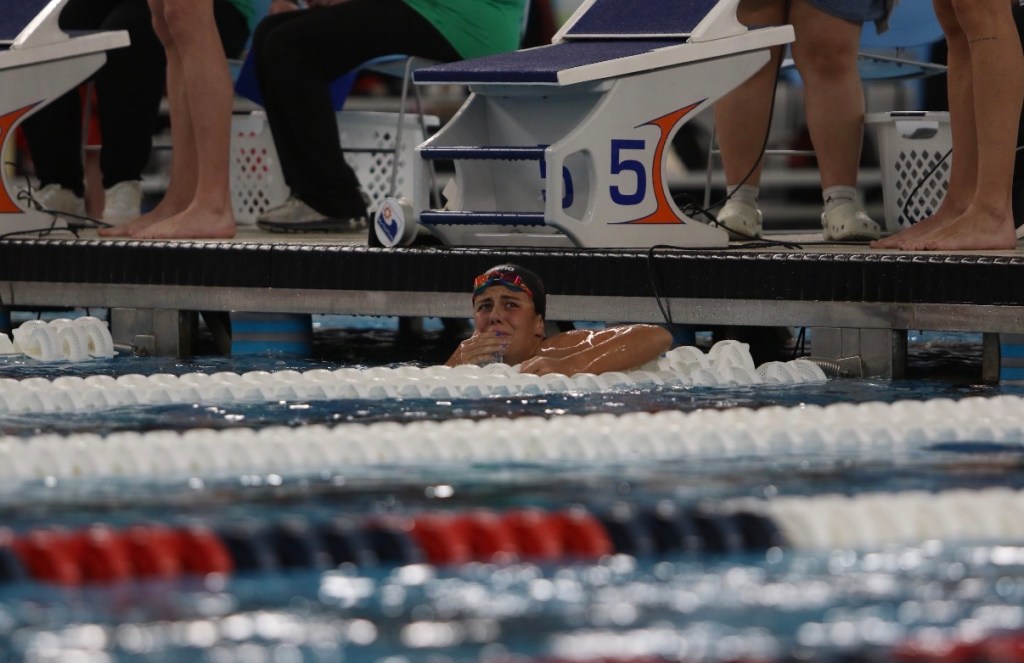
Your real job is doing all the invisible things that allow the visible moments to exist.
The meet swims? The best times? The championships?
Yeah—those only happen because you made sure they had a pool, a ride, eligibility, someone to keep them from killing each other, and just enough sanity to not quit midseason.
You will have so much to do that your brain will simply start deleting files.
You will forget things. Lose things. Constantly.
You’ll lose the pen to write down all the things you forget. Then forget where you left the list of things you forgot. At one point I lost my glasses (I wear contacts.) You’ll certainly lose your patience.
Try anyway.
You will still get overwhelmed. You will still fail. You will still make mistakes.
But you should try to…
2. Choose the Right Mistakes
“But Izzy, what does that even mean?”
Fair question.
As I’ve stated (more times than makes you feel comfortable, I’m sure) you’re going to screw up. Frequently. Publicly. Sometimes impressively.
So the goal is not to avoid mistakes. That’s not happening. The goal is to make the right ones.
Did you blow up on an athlete because you genuinely believe they’re capable of more…or because you were irritated and they were the easiest target?
Did you push back on another coach because you thought it was best for the team…or because your ego got poked and you needed to defend your honor?
Did you argue with the official because your team deserved someone in their corner…or because you were emotional and needed somewhere to put it?
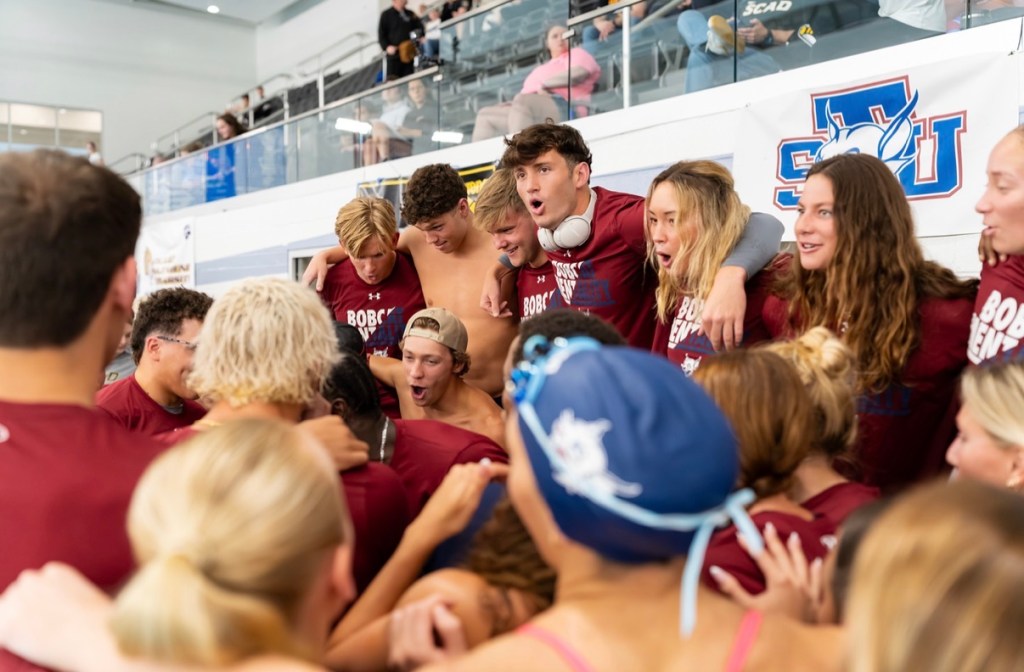
Intent matters more than we like to admit.
Crimes of passion are much more easily forgiven.
3. Leaders Eat Last.
Let me set the stage: You’re exhausted. You’ve been up early all week. You finally have a morning off.
And then a swimmer texts you:
“Hey Coach, I misread the schedule and missed practice. Can I make it up at 5 a.m. tomorrow?”
Amazing.
You have three choices:
Option A: Send the workout and stay in bed.
Technically acceptable. But I’d keep reading.
Option B: Show up, but make sure they know how much this inconvenienced you.
“Hope this was worth ruining my morning.”
Option C: Show up like it actually matters.
Bring music. Bring energy. Act like you chose to be there.
Here’s the annoying part: Option C works.
Because doing a solo practice is miserable. And they know when you care.

They won’t notice everything.
They won’t notice you picking up their fins so they don’t have to carry them back to the other side of the pool. Or that you gave someone a ride even though it was 20 minutes out of your way. Or that you stayed an extra hour in your office just in case that one person who looked off wanted to stop by.
Do it anyway. Do it without a show. Do it without an attitude. And do it again.
None of these things feel significant.
All of them are.
Because they will notice a pattern. And one day, when something actually matters, they’ll trust you.
And that trust didn’t come from your beautifully designed practice set.
It came from the fact that you consistently showed up in all the insignificant ways.
Because…
4. They Are Not a Means to an End.
At some point, a swimmer who has never scored a point for you will sit in your office and say:
“I don’t feel like you care about me.”
And your immediate internal reaction will be:
…are you serious?
You’ll want to list everything you’ve done, the feedback, the conversations, the effort.
You can brush it off and subtly imply that this is a them problem, not a you problem.
But isn’t it a little bit your problem too?
Their perception is their reality.
And if they feel like you only care about your too guys… that spreads. Fast.
For better or worse, everyone you invite onto your team contributes something.
Maybe it’s points.
Maybe it’s competition in practice.
Maybe it’s positivity.
Maybe it’s even just balancing scholarship numbers.
Or maybe it’s negativity, and distraction.
But for better or worse, everyone has a role.
The goal is to have the most people have the most positive impact.
If you want your best athletes to buy in, everyone has to believe they matter. Not because of what they produce, but because they’re on your team. In your family. They are a part of your tribe.
They are not a means to an end, they are an end in themselves.
And you have to believe that before anyone else does.

And you have to believe that before anyone else does.
You also have to…
5. Mind The Gap
“You’re not their friend.”
Correct.

But if you constantly say “you’re more than just an athlete,” you don’t get to turn around and be only a coach.
You must be a human— with thoughts and feelings and life outside of the pool.
You should enjoy spending time around your athletes. You should be emotionally invested in their well-being. You should want to be well-liked. You should want to be respected.
There should be a line. There should be a gap.
If the gap is so wide you can’t step down to their level, then you’re probably doing it wrong.
But nobody wants to take orders from a cardboard cut out a whistle that they believe has magically bestowed upon them right of being respected.
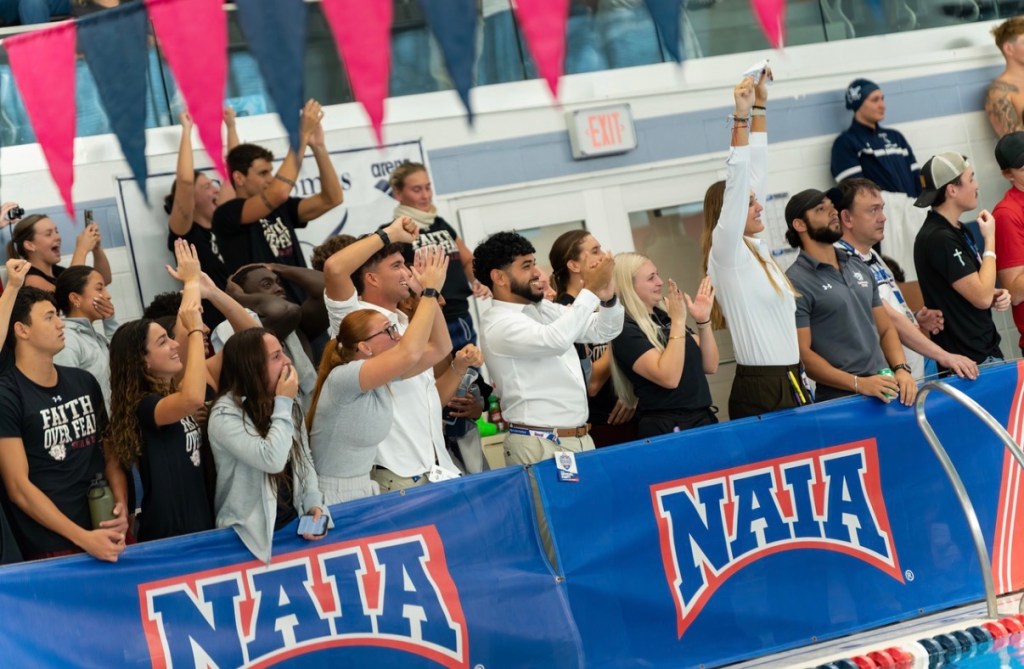
You recruited them. You made promises. You told them they’d be taken care of.
So when something goes wrong—on deck or off—you’re one of the first people they they turn to.
It’s a lot, but it’s also kind of the whole point of doing this.
6. Being Respected is a Privilege.
There’s this old-school idea that respect is automatic.
It is not.
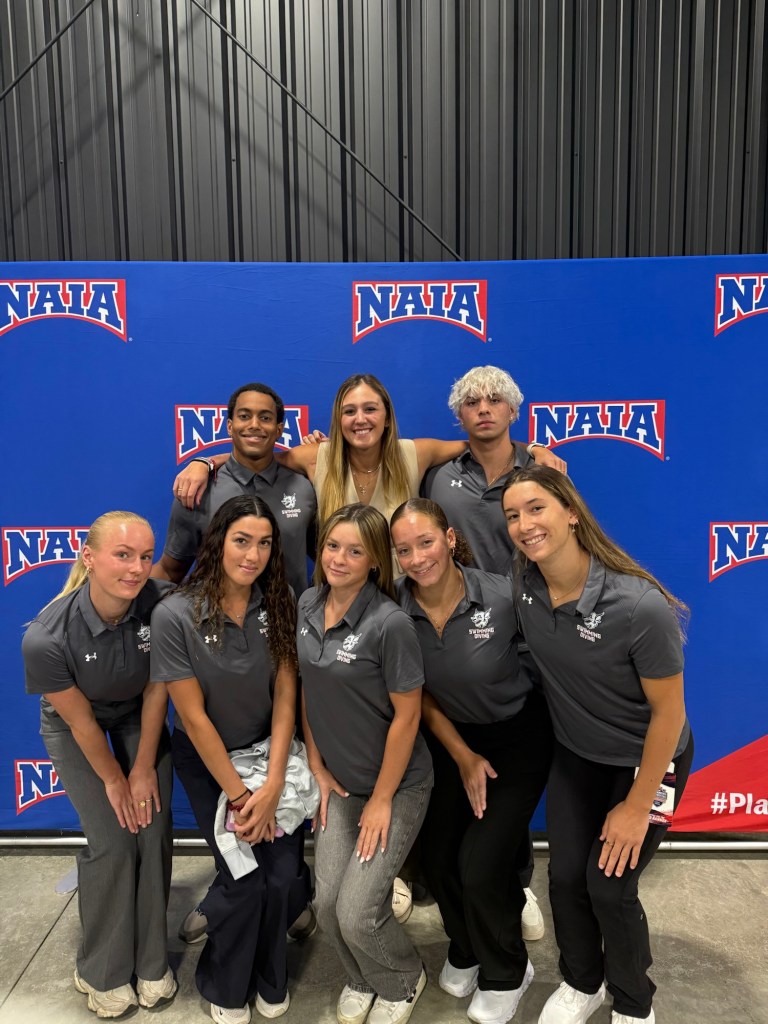
You don’t get respect because you’re older, or because you’re the coach, or because you have authority. You get respect because you’ve shown you deserve it.
Same with being liked.
You can stand on deck and say: “I don’t care if they like me.”
You’re lying. Everyone cares.
And more importantly—it affects how they respond to you.
You can blame “this generation” all you want.
Or you can accept that if your team is full of humans that can sometimes be entitled, disrespectful, little jerks. It might not be your fault, but it is your responsibility.
It is now your job to get them to not only like you, but respect you as well.
Because
7. They Are Now Your Problem
Your athletes are away from home— sometimes for the first time, sometimes from across the country, sometimes from across the world.
So congratulations, you are now their family.
And my condolences, they are now your problem.
And when the day comes (and it will) when everything goes wrong, the world is ending, and they’re on the ledge, guess what?
8. You Won’t Always Have the Right Thing to Say
My own college career had a little bit of everything. Transfers, injuries, mental health struggles, chronic illness. If something could go wrong, it at least gave it a shot.
I used to think everything was a massive deal. Every success felt euphoric, and every failure catastrophic.
Then one random day, I kinda woke up and thought:
“Damn, It’s really not that deep.”
And somehow… it got better.
I didn’t take a magic pill, I didn’t reinvent myself.
That’s just what happens, I guess. At some point, eventually, it will get better. And it did.
Now I sit on the other side of the desk and swimmers come in feeling exactly how I used to feel.
And sometimes I have nothing.
No speech. No perfect advice. No easy solution to the problem at hand.
And yet, they leave feeling better.
Not because I have said something profound, but because they felt understood.
I have been there.
Turns out, most people don’t need solutions.
They just need someone to sit there and not look uncomfortable while they fall apart.
Speaking of falling apart. When working with a group of young adults who believe their entire self-worth is dependent on their performance. It’s easy to take on the pressure for yourself.
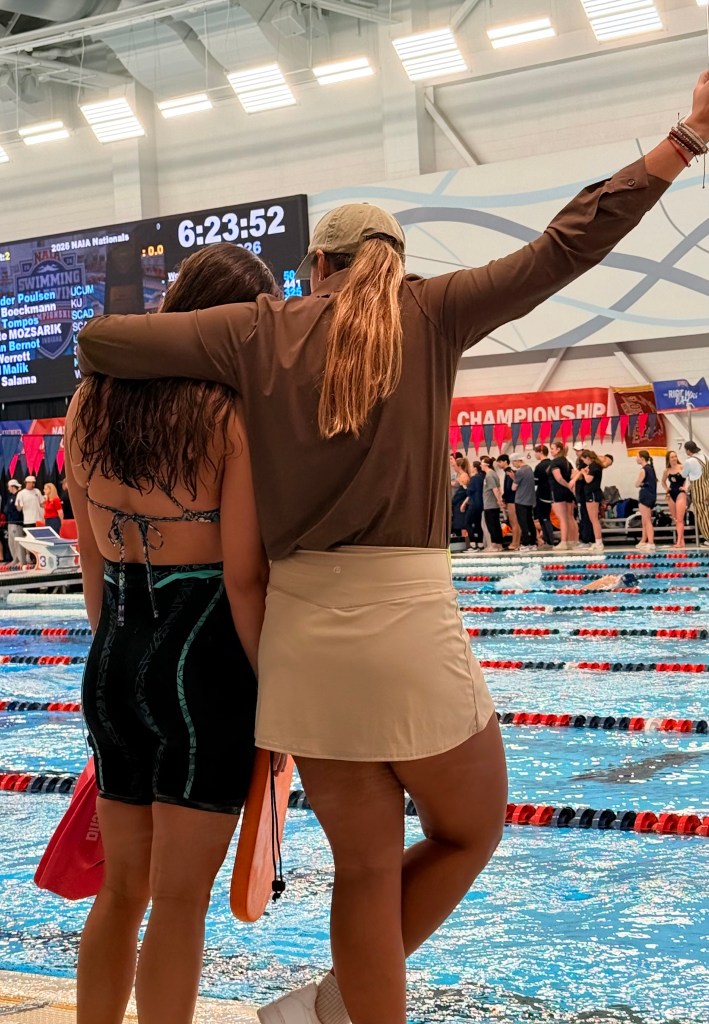
You have to have the perfect micro-cycle, the perfect practices, the perfect taper. But here’s the thing:
9. It’s (Almost) Never About The Training
This feels slightly sacrilegious to say out loud in the swimming world, but hear me out.
Yes, training matters. You should learn how to design sets and periodization cycles. You should care about it—a lot.
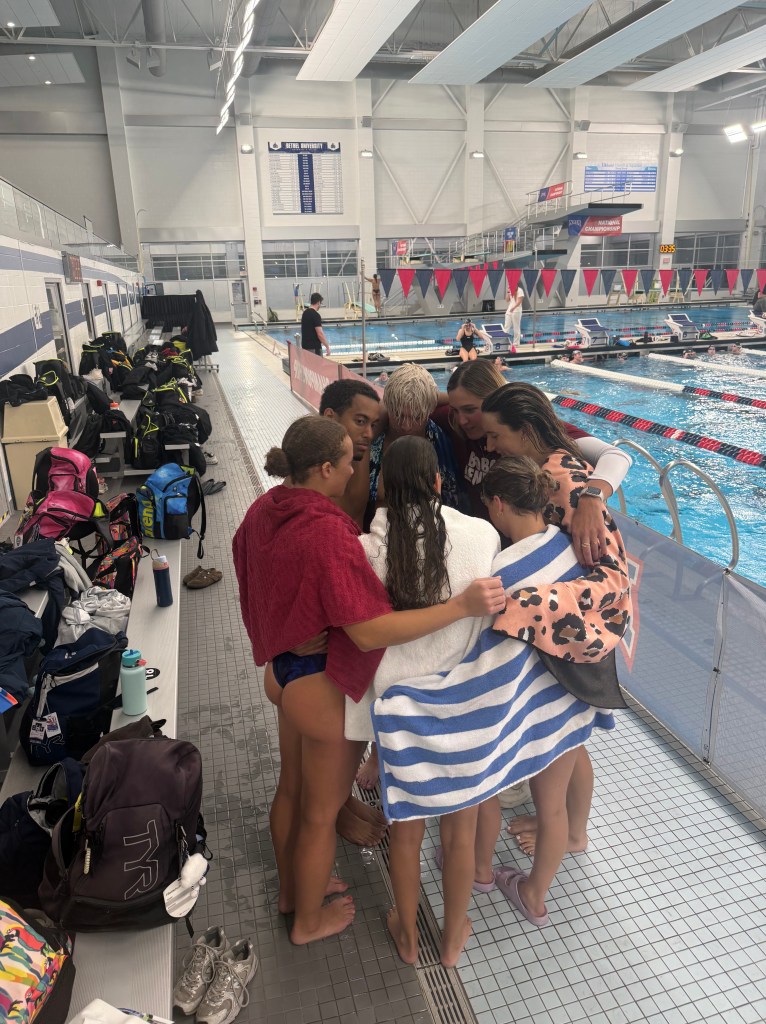
But training is not a one-size-fits all and it’s not the thing that makes or breaks a season.
If your athletes don’t trust you, don’t believe in what you’re doing, it doesn’t matter how perfect your training plan is.
You can write the most beautiful, perfectly structured, individualized training plan the world has ever seen—and that’s great—but it cannot be fragile.
The catch-22 is that your training plan has to be adaptable. And for it to be adaptable, it cannot be perfect.
Miss a practice? You’ll survive.
Shoulders hurting? Kicking works too.
Lightning cancels practice? The taper is not ruined.
Don’t build a house of cards in a tornado.
It doesn’t have to be pretty. It has to be sturdy.
That all being said, this not an excuse to not do your research.
Read books, ask questions, seek out advice.
10. Become a Mentee
Learn from everyone.
Learn from the other coaches on your staff. Learn from your athletes. Ask for feedback.
Ask to buy other coaches to get coffee.
Yes—even the ones who beat you.
Yes—even the ones you think you disagree with.
They’ve been doing this longer.
They’ve made more mistakes than you. (Impressive, I know.)
And they will tell you about them—if you actually listen.
And the funny part is, some of the best lessons aren’t coming from across the country or at some conference.
They’re coming from the people you see every day.
From the staff you work alongside.
From the athletes you get to coach.
Even from the coaches that coached you.
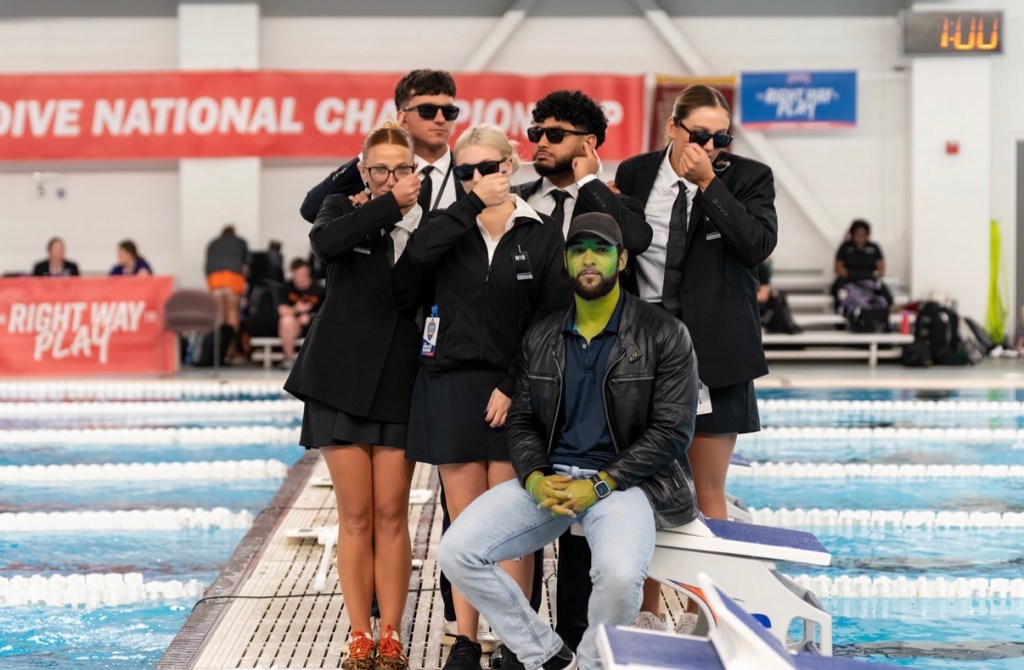
I am forever grateful to this staff for their guidance, and to this team for allowing me to grow alongside them.
I have learned so much from each and every one of you. There is no one else I would have rather started this journey with.
Thank you for the trust. Thank you for your patience. Thank you for letting me figure it out in real time.
I have learned so much from each and every one of you. There is no one else I would have rather started this journey with.
Thank you for the trust. Thank you for your patience. Thank you for letting me figure it out in real time.
Thank you to all my past coaches who have seen me at my best and at my worst. I now carry the best parts of you with me. You have left a legacy that I will live out.
And thank you to everyone who let me buy them that cup of coffee.
Because of you all, one day someone is going to ask to buy me a cup of coffee.
They’ll be annoyingly persistent about it—just like I was.
And I’ll say yes.
I’ll pass on everything I’ve learned.
I’ll tell the stories—of this team, of these people, of my before coaches, and pf my successes and failures.
All of which I am forever grateful for.
Thanks for reading, y’all.
Till next time,
God Bless & Go Bobcats!
Coach Izzy

 Site Title
Leave a comment